




함께 자주 구매하는 상품
설명
- 재질: 자기
- 원산지: 허난성 위저우.
- 준자기 다관: 13.0cm x 9.0cm, 용량 235ml.
- 역사적인 준요(鈞窯) 송나라의 준요는 여요(汝窯), 관요(官窯), 정요(定窯), 가요(哥窯)와 함께 중국 5대 명요(五大名窯) 중 하나였습니다. 준요는 보라색 기운이 감도는 독특한 다색 청자 유약과 정교한 도자기 형태가 특히 유명했습니다. 준자기 양식은 중국 송나라 휘종 시대(1082년)에 처음 만들어졌으며, 허난성 위저우시에서 생산되었습니다. 오랜 세월 동안 원조 준요 작품의 양식을 계승한 현대적인 다기들이 계속해서 제작되어 왔습니다.
- 준요 특유의 유약에서 나타나는 강렬한 얼룩무늬는 여러 겹의 유약을 칠하고 다양한 천연 금속 산화 안료를 사용하여 서로 다른 색상의 층을 만들어냅니다. 도자기는 매우 정밀하게 제어되는 고온에서 구워지며, 이 과정에서 유약이 물줄기처럼 컵의 옆면을 따라 부드럽게 흘러내려 여러 색이 촘촘하게 깃털처럼 어우러진 시각적 효과를 만들어냅니다.
- 유명한 역사적 준요 양식의 다채로운 청자 유약이 돋보이는 다관입니다. 준요 특유의 얼룩진 청자 유약은 연한 파란색부터 짙은 청흑색까지 다양한 색조를 띠며, 가장자리에는 불규칙하게 따뜻한 갈색과 때로는 보라색이 감돕니다. 각 다관의 무늬는 모두 고유합니다.
- 몸체는 원조 광석에서 얻은 철분이 풍부한 흙으로 만들어졌으며, 완전히 수작업으로 끌어올려 성형한 후 수없이 다듬고 정제했습니다.
- 가마 안의 변화로 인해 서로 다른 색이 만들어지므로, 가마의 변화는 각 다관을 고유하게 만듭니다.
- 준자기의 유약은 화학적인 것이 아니라 10가지 이상의 천연 광물을 원료로 사용합니다.
- 월백 자점 다관은 고대부터 "72가지의 공정"을 거친다고 전해져 왔습니다. 각 공정은 까다로우며, 조금이라도 주의를 기울이지 않으면 그동안의 모든 노력이 수포로 돌아갑니다.
- 고대에는 "부유한 집안도 준자기 한 점의 가치에는 미치지 못한다"는 말이 있었습니다. 이 유명한 말은 수백 년 동안 수집가들 사이에서 전해 내려오며 중국 수집가들 사이에서 준자기의 위상을 잘 보여줍니다.
- 소박하면서도 풍요롭고 고전적인 아름다움을 발산하기에, 장작 가마 도예가들이 이에 매료되어 많은 노력을 기울여 추구하는 것입니다.
- 자기 유약에는 불에 탄 흔적과 장작을 태울 때 생긴 재의 유약 흔적이 나타납니다. 유약의 색은 가마 안의 변화에 따라 달라집니다. 각 작품은 저마다의 유약과 질감을 지니고 있습니다.
- 장작은 자연과 소박함을 추구하며, 자연만큼이나 자연스럽습니다. 장작의 "불 흔적"과 유약의 조화는 기름과 금빛을 밝게 빛나게 합니다.
리뷰5.0
Beautiful little teapot ![Ashley Perez review photo]()
Customer Reviews
Based on 1 review
100%
(1)
0%
(0)
0%
(0)
0%
(0)
0%
(0)
A
Slightly smaller than I had expected, but that’s my fault. A beautiful and delicate teapot, nonetheless. I have yet to use her as I’m busy with work, but I look forward to trying it out! She’s a beauty to have, and the staff was so kind and amazing too!
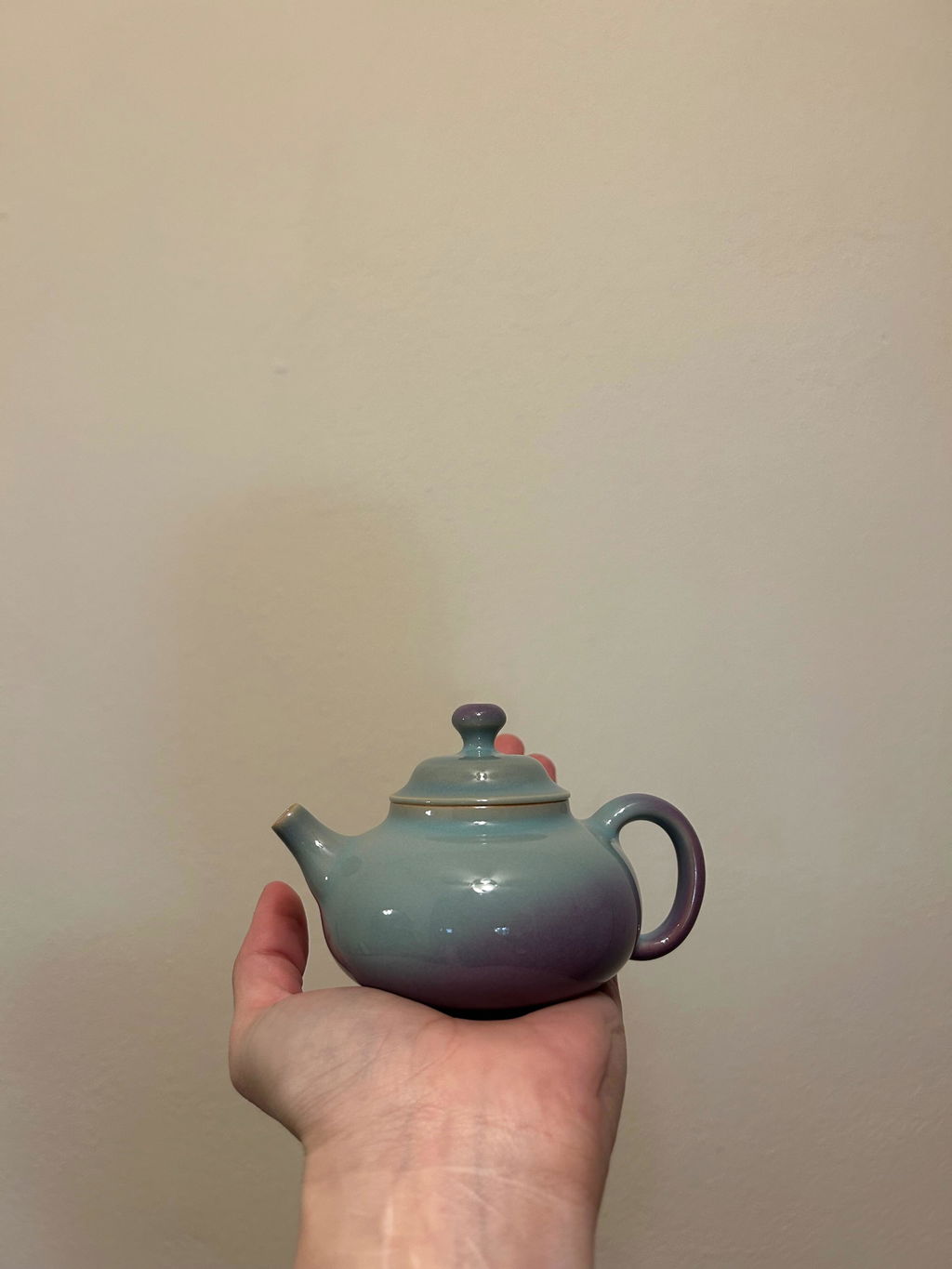

준 자기 찻주전자 월백 자색 반점 주전자
$157.65
자주 묻는 질문
What are the dimensions and capacity of the Jun Porcelain Teapot Moon-white Purple Spot Pot?
The Jun Porcelain Teapot measures 10.5cm by 7.5cm and has a capacity of 120ml, making it perfect for individual servings or personal use.
What makes the Jun Porcelain Teapot unique compared to other teapots?
This teapot features a striking multi-colored blue glaze with hints of purple, created using natural mineral pigments and high-temperature firing, reflecting the historic Jun Kiln style from the Song Dynasty.
What is the traditional origin of the Jun Porcelain Teapot?
The teapot originates from Yuzhou, Henan, where the historic Jun Kiln was renowned for its fine, multi-colored glazed ceramics during the Song Dynasty, continuing a centuries-old tradition in modern times.
How are the glazes and patterns on the Jun Porcelain Teapot formed?
The unique patterns are created by applying multiple layers of glaze with natural metal oxide pigments and firing at high temperatures, resulting in dense feathered visuals with irregular accents of warm brown and purple.
What does the craftsmanship process of the Jun Porcelain Teapot entail?
Each teapot undergoes over seventy-two meticulous steps, including hand-pulling, shaping, and refining the iron-rich clay, ensuring a unique piece with natural glaze variations and rich historic heritage.
